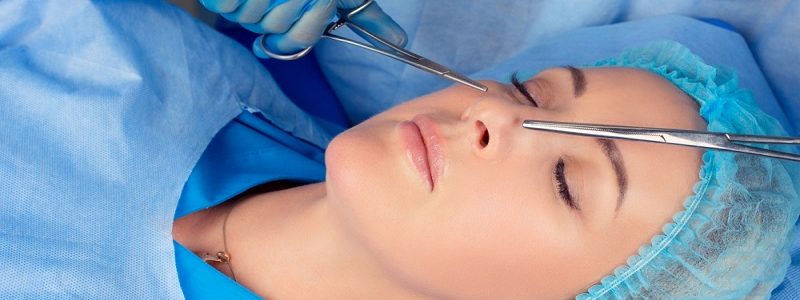
Investigating the correction of nasal function disorders at the same time as rhinoplasty surgery
About 20% of patients who refer for rhinoplasty surgery. They complain of nasal dysfunction. Another 80% suffer from nasal congestion, nasal discharge, post-pharyngeal discharge, snoring, morning fatigue, difficulty in breathing, nasal allergic complaints, headache complaints when breathing through the nose for a long time, and also nasal shape disorders.. One of the most important goals in rhinoplasty is to correct nasal function disorders. It is important to eliminate other nasal problems, especially nasal obstruction. If there is a bony curve in the nasal cartilage. Removing it during rhinoplasty removes nasal obstruction. Reducing the thickness of the skin in large and fleshy noses also makes breathing easier.
The presence of adenoids (third tonsil) , which is mostly seen in children. But in adults, it is sometimes the cause of nasal obstruction, it can be removed during rhinoplasty. In people who complain of headache, nasal discharge or discharge from the back of the throat and nose. Rhinoplasty and sinusitis may be performed simultaneously with the presence of chronic sinusitis.
Complaining about snoring while sleeping is a common disease. One of the most important causes of snoring is nasal problems, and at the same time, this problem can be solved.
It should not be forgotten; Rhinoplasty is performed not only with the aim of correcting the shape of the nose, but also with the aim of correcting the functions of the nose, a procedure in which other problems related to the nose are solved at the same time..
People who do not need rhinoplasty and only undergo surgery to solve problems with the function of the nose, will pay a different cost of rhinoplasty.. These types of surgeries will often be covered by insurance.
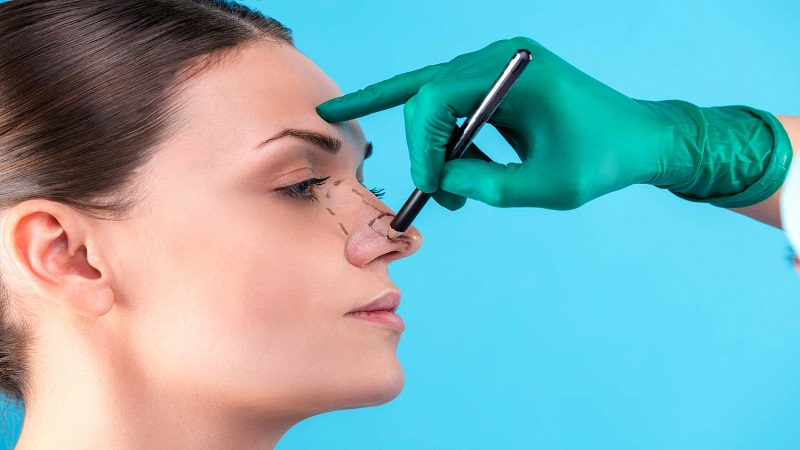
Is there a solution to repair failed nose surgery?
Unsuccessful nose surgery has certain characteristics. The most common feature is that the tip of the nose and the blade of the bridge of the nose appear to be separate pieces. This is often because too much of the bones behind the nose have been removed. Another characteristic of unsuccessful rhinoplasty surgery is the thin and small tip of the nose. This is again the result of excessive destruction of the cartilage of the tip of the nose. However, the cartilage with a very important reference point at the tip of the nose must remain intact in a certain dimension.
Sometimes I see that all these cartilages have been removed and the nose is apparently compressed. Another bad feature of the nose is that sometimes the tip of the nose is too upturned so that when you look at it from the front, the inside of the nostrils is visible.. In women, the nose should have a maximum angle of 100-110 degrees with the lips. In men, this angle can be 90-100 degrees. In male patients, the bridge of the nose should not be curved.
If people are not satisfied with the result of the previous surgery. Secondary rhinoplasty or reconstructive surgery is recommended.
In fact, nose reconstruction surgery is an opportunity. that patients do to reshape the nose and the skill and expertise of the surgeon is very important.
As the number of reconstructive surgeries increases, the correction becomes technically more difficult. And the probability of success decreases.
Therefore, it is recommended to make sure of the skill of the surgeon before deciding to perform nose surgery in order to save the cost of nose surgery.